


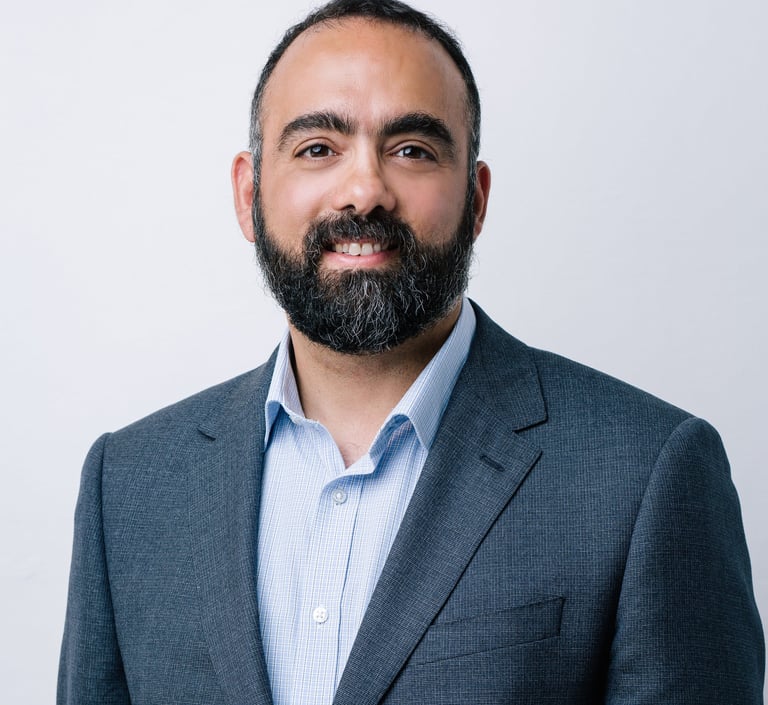
I'm James Deguara
I’m an independent consultant based in Malta, working remotely with clients and distributed teams. For more than 25 years, my work has involved helping people deliver software, develop products and improve the way their businesses operate.
I chose project management deliberately, and my work has since grown across product leadership, delivery and business transformation. At Idox Health, I was the company’s first Product Manager, creating product-management processes while developing the products themselves. I later led the delivery organisation, dealing with the practical work of getting those products into clients’ hands.
Since then, my consulting work has included global organisations such as Yara and AstraZeneca, alongside smaller businesses building or improving their operations. Those settings bring different constraints, but they share a need to connect business priorities, technology and the people doing the work.
Why I enjoy this work
I like solving difficult problems. The most satisfying part is the moment when a system or process starts working as people need it to, and something that had been a source of frustration becomes ordinary, useful work.
I still remember implementing a system with a team at a bank in Riyadh. We had spent the day identifying and fixing errors in our system and others, keeping going as new problems appeared. Then it came together. What stayed with me was the shared excitement and relief: a group of people had worked through something difficult together.
That feeling still matters to me. I enjoy understanding the problem, finding a workable way forward and being part of the team that makes it happen.
Understanding comes first.
Early in my career, I thought finding the solution was the difficult part. Experience has taught me that understanding the problem often takes more work. I want to know how the business actually operates, who encounters the difficulty and what people have quietly learnt to work around.
I have worked on projects that went well and seen others fail despite talented people and good intentions. Both have shaped my judgement. Experience gives me possibilities to draw on; the situation in front of us determines which are useful.
What you can expect from me
Understand before recommending. I listen to the people involved, examine the work and ask what success would look like. The answer may be a better process, clearer ownership or a change to the system.
Explain my thinking. I make the reasoning, assumptions and trade-offs behind a recommendation clear, so you can understand the choice and challenge it.
Challenge assumptions respectfully. If a commitment looks unrealistic or a proposed feature has little value, I will raise it. I want people to feel able to discuss a concern before it becomes a larger problem.
Communicate openly. I will tell you what I know, where I am uncertain and when new evidence changes my view. Difficult news deserves the same clarity as good news.
Document properly. Decisions, processes and system knowledge need to be usable by the people who follow. I make documentation part of the work and the handover.
Leave things in better shape than I found them. I involve your team, share knowledge and provide practical training. The aim is to leave people with greater capability and confidence to continue.
Take responsibility for my work. I stand behind my advice and what I deliver. If something needs correcting, I address it; if the direction needs to change, I explain why.


Technology should help people do their work.
I enjoy technology and the possibilities it creates. Its value is in what it helps a business and its people achieve. Some of my most useful advice has been that a client did not need another system: the existing one needed a clearer process, better ownership or a more thoughtful implementation.
How I use AI
AI is part of my everyday work. I use it to explore ideas, support analysis and help with implementation. On AudioGuide, my own museum-guide product initiative, I have also set up AI agents to automate QA, raising quality while dramatically reducing the effort required.
That gives me more room to investigate and test possibilities. It also makes review and judgement essential. I remain responsible for every recommendation I make and every document carrying my name. I review AI-assisted work, decide what to rely on and recognise where specialist expertise is needed.


I become part of the team for the work we agree.
Sometimes the need is a focused piece of advice or an assessment. Sometimes it is ongoing leadership or someone who can take an active role in delivery. We agree the scope, responsibilities, decisions and level of involvement around what you need to accomplish.
The collaboration works best when I can speak with the people who understand the work, hear different views and raise difficult questions openly. I bring an outside perspective and take responsibility for my contribution; progress comes from working with your team.
Throughout the engagement, I pay attention to what happens after I leave: who owns the process, whether the documentation is useful and whether people feel able to carry the work forward.
Tell me what you are trying to achieve.
You do not need a finished brief. Tell me what is happening, what you have already tried and what better would look like. We can talk through the situation and whether the way I work is a good fit for what you need.